The Best Visa Options for Living and Working Remotely in Thailand
Planning a longer stay in Thailand as a remote worker, founder, retiree, spouse, or employee? This guide compares the main legal pathways so you can understand which visa fits your situation before you apply.
Thailand has more long-stay visa choices than ever, but the best option depends on what you actually need to do here. A digital nomad who only works for overseas clients may need a very different route from someone taking a Thai job, opening a company, joining a spouse, or retiring in Chiang Mai.
This page gives you a practical comparison of the major visa options people commonly consider for living in Thailand long term. It is written for planning, not as final legal advice. Embassy rules, immigration office requirements and document standards can change, so always confirm your case before making travel or employment decisions.
What You Will Learn
- A quick comparison of the main long-stay visa options
- Destination Thailand Visa for remote workers and soft power activities
- Long-Term Resident Visa for higher-income professionals, specialists and retirees
- Non-Immigrant B Visa and work permit path
- SMART Visa for targeted-industry founders and specialists
- Thailand Privilege Visa for premium long stays
- Marriage and retirement options
- Education Visa for genuine study in Thailand
- Visa types that should not be stretched into long-stay work solutions
- When setting up a Thai company makes sense
Thailand Visa Options at a Glance
Use this as a first filter. The right choice still depends on nationality, where you apply, your source of income, current visa status, family situation and documents.
| Visa option | Typical fit | Work in Thailand? | Main limitation |
|---|---|---|---|
| DTV | Remote workers, freelancers, digital talent, soft power activities or medical treatment | For overseas clients or qualifying activities, not Thai employment | Does not create a work permit or permanent residence track |
| LTR Visa | Higher-income remote workers, highly skilled professionals, wealthy citizens and pensioners | Possible under the correct LTR category and conditions | Higher qualification threshold and BOI endorsement process |
| Non-B Visa | Foreigners employed by, investing in, or doing business with a Thai company | Yes, with a work permit | Requires employer or company support and ongoing compliance |
| SMART Visa | Technology startup founders, investors and talent in targeted industries | No work permit needed for endorsed work | Not a general digital nomad visa |
| Thailand Privilege | Premium lifestyle stay for people who do not need local work rights | No | High membership cost and no Thai work permission |
| Marriage Visa | Foreign nationals legally married to a Thai citizen | Possible with correct work permit support | Depends on genuine marriage and renewal documents |
| Retirement Visa | Applicants age 50+ who do not need to work | No | Financial proof and no employment permission |
Destination Thailand Visa (DTV)
A popular 5-year multiple-entry option for remote workers, freelancers, digital talent, soft power activities and certain medical treatment cases.
The DTV is often the most accessible option for people who want to spend significant time in Thailand while earning income from outside the country. It is especially relevant for remote employees, freelancers and online business owners who are not planning to work for a Thai employer.
Official DTV document lists generally include a passport bio page, recent photo, proof of current location, financial evidence of at least 500,000 THB, and evidence of qualifying remote work, portfolio, soft power activity, or medical appointment. Requirements can vary by embassy, so check the specific Royal Thai Embassy or Thai e-Visa instructions before applying.
DTV is usually strongest when you:
- Work remotely for clients or an employer outside Thailand.
- Can document your work, portfolio, contract, business or activity clearly.
- Want a flexible long-stay option without Thai employment.
- Are comfortable managing extensions, exits and re-entries when required.
Pros
- Long 5-year visa validity.
- 180-day stay per entry, with extension potential.
- Designed for remote work and qualifying lifestyle activities.
- Usually simpler than LTR or SMART Visa routes.
Cons
- Not a path to Thai employment.
- Extensions and entry decisions remain subject to immigration discretion.
- Document expectations may differ between embassies.
- No work permit benefits, and no permanent residence track.
Visa Support Thailand note: DTV is attractive, but it is not automatically the best choice for everyone. If you may work with a Thai company, hire staff, open a local entity, or pursue permanent residence later, compare it carefully against Non-B and LTR options.
Long-Term Resident Visa (LTR)
A BOI-managed 10-year visa program for qualified remote professionals, highly skilled specialists, wealthy global citizens and wealthy pensioners.
The LTR Visa is a stronger long-term solution for people who meet its income, employer, asset, investment, pension or specialist requirements. It can also reduce friction for some work situations because the program is designed for high-value foreign residents.
The BOI currently groups LTR applicants into four categories: Work-From-Thailand Professionals, Highly Skilled Professionals, Wealthy Global Citizens and Wealthy Pensioners. You can review the latest official criteria and documents on the LTR Visa Thailand BOI website.
Common LTR qualification themes
- Remote professionals generally need a qualifying overseas employer and strong personal income evidence.
- Highly skilled professionals usually need work in targeted industries or approved institutions.
- Wealthy global citizens must document substantial assets and qualifying investment.
- Wealthy pensioners must be age 50+ and meet passive income or investment criteria.
- Health insurance, social security coverage, or a qualifying deposit is normally part of the review.
Pros
- One of Thailand's most stable long-stay options.
- Up to 10 years of permission when maintained correctly.
- Annual reporting instead of ordinary 90-day reporting for qualifying LTR holders.
- Dependent options for spouse and children.
Cons
- Higher income, employer, asset or professional thresholds.
- BOI qualification endorsement requires careful documentation.
- Changing work or failing to maintain criteria can affect status.
- Not every remote worker will qualify.
Non-Immigrant B Visa and Work Permit
The standard route for foreigners who will work for a Thai company, manage a Thai business, or need legal employment rights in Thailand.

If you will actually work in Thailand for a Thai employer or your own Thai company, the Non-B plus work permit path is often the correct legal foundation. It can feel paperwork-heavy, but it is also one of the clearest options for people who need local work rights.
For official document categories, start with the Thai e-Visa system and the instructions of the embassy where you will apply. Company documents, invitation letters, employment confirmation and work permit paperwork are commonly part of the process.
Non-B is usually strongest when you:
- Have a Thai employer ready to sponsor your visa and work permit.
- Are setting up a Thai company for a real business operation.
- Need local employment rights, banking credibility or a long-term professional base.
- Want a route that may support future permanent residence planning when maintained correctly.
Pros
- Supports legal Thai employment with a work permit.
- Renewable when the company and applicant remain compliant.
- Well-established process understood by employers and immigration offices.
- Useful for serious business setup and professional relocation.
Cons
- Requires company support and ongoing filings.
- Not designed for casual remote work without a Thai employment basis.
- Company ratios, capital and document requirements can be strict.
- Changing jobs requires careful timing.
SMART Visa
A specialized BOI pathway for startup entrepreneurs and selected talent connected to Thailand's targeted industries.
The SMART Visa is not a general remote work visa. It is aimed at startup founders, specialists, investors and executives connected to Thailand's approved innovation sectors. The official SMART Visa site notes that digital nomads or remote workers without a Thai entity contract, assignment, or service link are not eligible for SMART.
Review the latest SMART categories, documents and targeted industries on the official SMART Visa BOI website.
Pros
- No ordinary work permit requirement for endorsed work.
- Potentially strong fit for genuine tech startup cases.
- Re-entry and reporting benefits for qualifying holders.
- Dependent privileges may be available.
Cons
- Narrow eligibility.
- Endorsement process can be demanding.
- Work is tied to approved activities or entities.
- Most ordinary freelancers are better served by DTV, LTR or Non-B planning.
Thailand Privilege Visa
A premium long-stay membership program for people who want convenience and status, but do not need permission to work in Thailand.
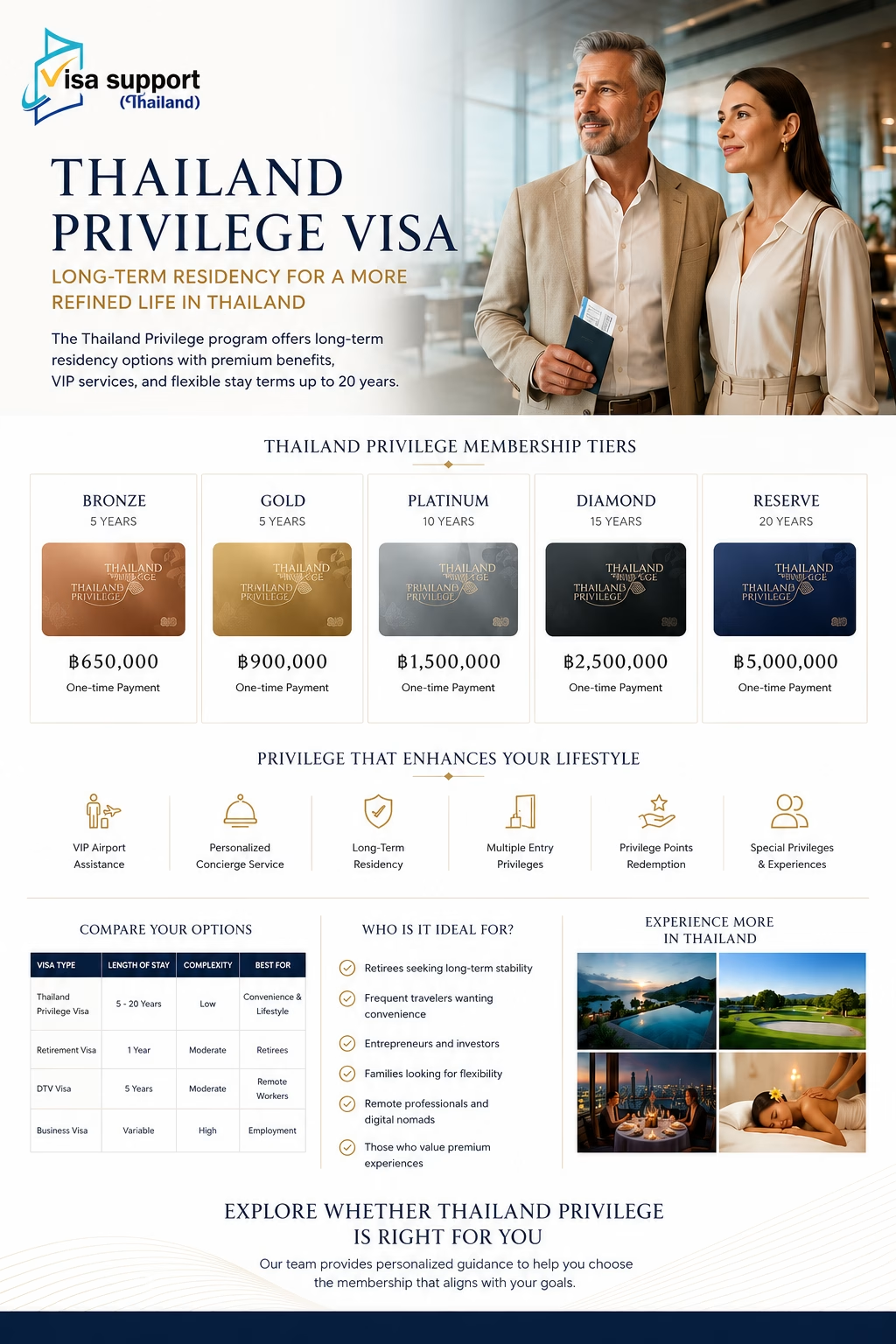
Thailand Privilege can be a good fit for applicants who want a long, relatively simple stay and have the budget for membership fees. It is not appropriate for anyone who needs to work for a Thai company or obtain a Thai work permit.
Membership tiers and fees change over time, so confirm the current package directly with Thailand Privilege or through an authorized advisor before applying.
Pros
- Long-stay convenience.
- VIP-style service benefits depending on tier.
- Simpler eligibility than many employment-based visas.
- Useful for passive-income residents and frequent long-stay visitors.
Cons
- No work permit eligibility.
- High upfront membership cost.
- Does not build a Thai employment record.
- Not a permanent residence strategy by itself.
Marriage and Retirement Visa Options
Two established Non-Immigrant O pathways for applicants whose stay is based on family or retirement rather than remote work.


A marriage-based extension can be a very practical long-term route for foreign nationals legally married to a Thai citizen. It can also support work permit planning with the right employer and documents.
A retirement visa is better for applicants age 50 or older who do not intend to work. Financial evidence is central, commonly including a Thai bank deposit, income evidence, or a combination depending on the specific route and office requirements.
Pros
- Established, familiar immigration categories.
- Annual extension options when requirements are maintained.
- Marriage route can be compatible with work permit planning.
- Retirement route is clear for applicants who do not need employment rights.
Cons
- Marriage route requires a genuine, documented Thai marriage.
- Retirement route does not permit work.
- Both require careful financial and residence documents.
- 90-day reporting and re-entry permit issues still matter.
Related guides: Marriage Visa Thailand and Retirement Visa Thailand.
Thailand Education Visa
A Non-Immigrant ED visa for foreign nationals who want to stay in Thailand while genuinely studying at an eligible school, university, language program, or approved course.
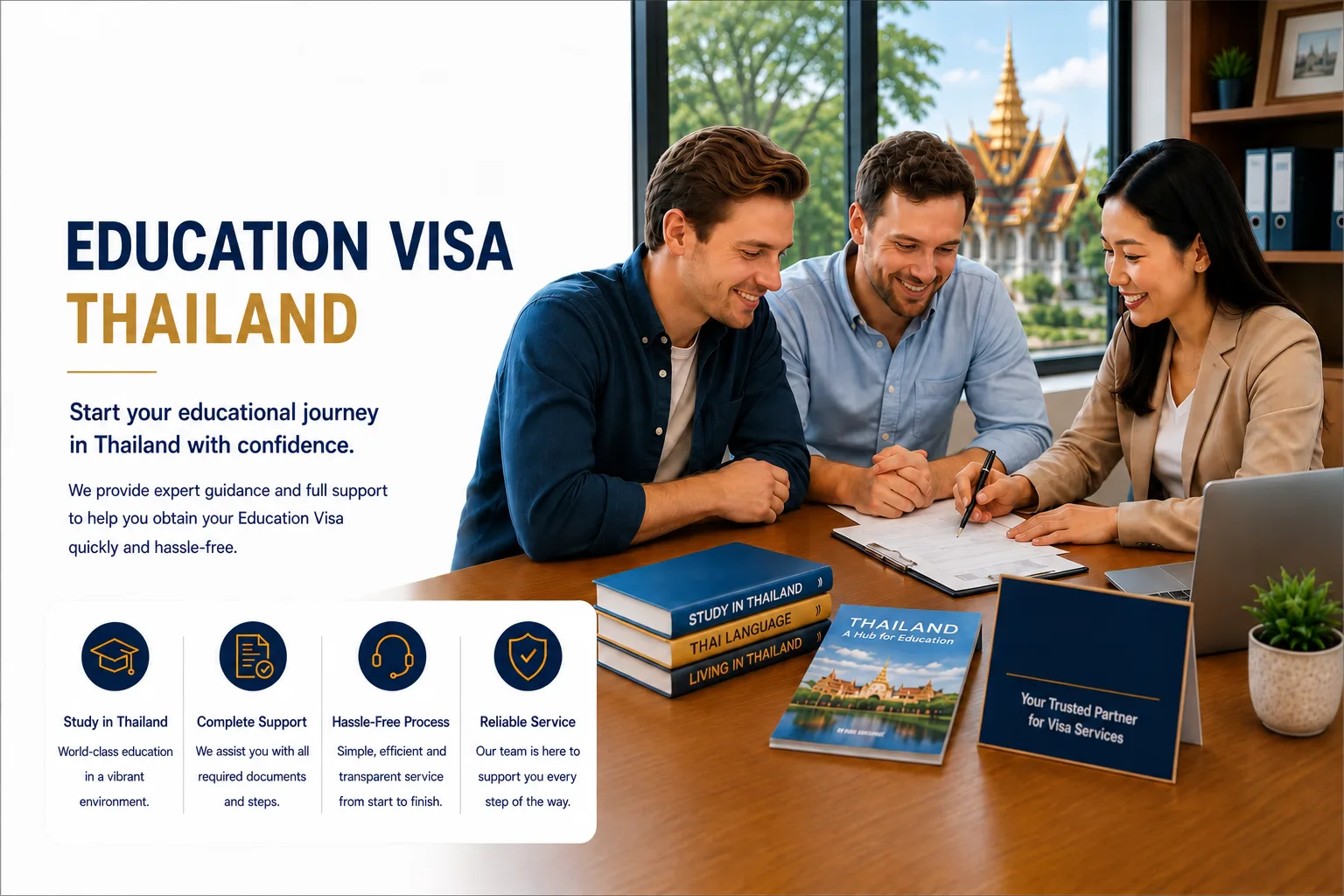
The Thailand Education Visa can be a useful long-stay option if your main purpose is to study. It is commonly used for university programs, Thai language courses, Muay Thai training, vocational study, and other approved education routes depending on the school and immigration requirements.
The key point is that the ED visa must be supported by real enrollment and ongoing attendance. Immigration officers may ask for school documents, attendance records, course details, and evidence that you are genuinely participating in the program.
Pros
- Can support a longer stay while you study in Thailand.
- Useful for language learning, university study, or approved training.
- Often easier to understand than employment-based visa routes.
- A good fit when education is your real reason for staying.
Cons
- Does not permit work in Thailand.
- Requires school support and proper attendance.
- Not suitable as a workaround for remote work or employment.
- Extensions and document standards can vary by school and immigration office.
Learn more: Read our full Education Visa Thailand guide for requirements, documents, process steps, common mistakes, and how Visa Support Thailand can help with an ED visa application.
Visa Types That Should Not Be Used as Long-Term Work Solutions
Some visas are useful for their intended purpose, but risky if stretched into a long-term living or working strategy. Misuse can lead to denied entry, cancelled permission to stay, fines, blacklisting, or work-related penalties.
Tourist Visa or Visa Exemption
Good for visiting Thailand. Not suitable for ongoing residence or work. Repeated entries can attract scrutiny.
Education Visa
Valid when you are genuinely studying with an eligible school. It is not a remote work visa and does not authorize employment.
Retirement Visa for Workers
Excellent for many retirees, but it does not permit employment. Working while on retirement status is a serious problem.
Practical rule: choose the visa that matches your real activity in Thailand. If your income source, employer, family basis, or business plan changes, your visa strategy may need to change too.
Should You Set Up a Thai Company?
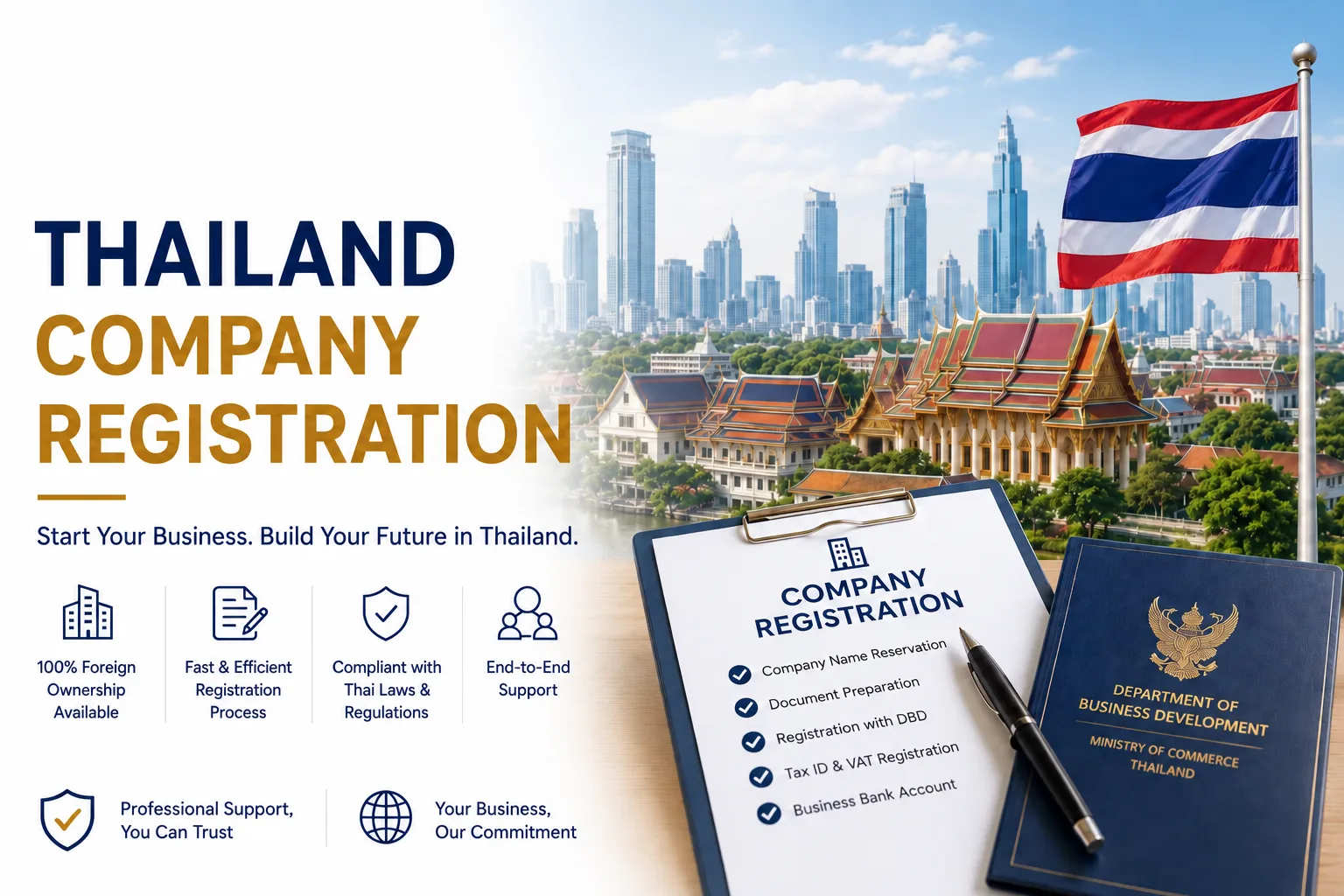
Setting up a Thai company can be the right move when there is a genuine business reason: local clients, hiring, commercial premises, investment, operations, or a planned Thai-market presence. It is usually not the simplest solution if the only goal is to create a visa for a solo remote worker.
A Thai company that sponsors a foreigner's work permit must satisfy ongoing corporate, tax, accounting, capital and employment requirements. In many ordinary cases, that includes the familiar employee-ratio issue for foreign work permits. If your business plan is real, those requirements can be managed. If the company exists only on paper, it can create more risk than benefit.
Company setup may make sense when:
- You will operate a real Thai business or branch activity.
- You need to invoice Thai clients or hire staff in Thailand.
- You have partners, investment, premises, licenses, or a clear commercial plan.
- You need a work permit for local management or employment activity.
Learn more about Business Visa Thailand or Work Permit Thailand.
How to Choose the Best Option
Start with what you will actually do in Thailand, then work backward to the visa category that supports it legally.
- If you work only for overseas clients or an overseas employer: compare DTV and LTR Work-From-Thailand.
- If you will work for a Thai company: look at Non-B plus work permit, or LTR if you qualify under a specialist route.
- If you are a tech founder or specialist: compare SMART, LTR and Non-B rather than assuming one is automatically better.
- If you are age 50+ and not working: compare retirement, LTR Wealthy Pensioner and Thailand Privilege.
- If you are married to a Thai citizen: marriage visa planning may be more flexible than many people expect.
Need a quick recommendation? Send us your nationality, current location, current Thai visa status, income source, age, family status and whether you need to work for a Thai company. We can usually narrow the realistic options quickly.
Client Reviews
Peter "Falcon" Boorda
First year in Thailand it has been a wonderful experience. The staff here made everything so easy and straightforward to deal with immigration. It is also great to learn Thai language if you are new here. Wonderful people and they have made everything stress free.
baraty blahblah
it was a very pleasent and helpful experience, we are from China and we're warmly welcomed by a very friendly lady, Ms Orange. She helped us with the inquiry about Thailand Retirement Visa with very clear and helpful information. Thank you! - Jessie Wang (from China)
Samantha Stegall
Orange is THE BEST visa agent in Chiang Mai!!! She knows all of the policies as they change and her prices are always fair. Definitely would recommend to anyone wanting to be in Thailand long-term.
Mike Tan
Kuhn Som is very experienced with visa rules and timings, she helped me to come up with a good plan in my situation and I'm happy I got her information from a friend of mine who has worked with her for over 10-years. I highly recommend this Visa service!
Frequently Asked Questions
What is the best Thailand visa for digital nomads?
Can I work for a Thai company on the DTV?
Is the LTR Visa better than the DTV?
Can I convert my tourist visa inside Thailand?
Do I still need 90-day reporting?
Related Visa Support Thailand Guides
These pages can help you go deeper into the specific path that looks most relevant.
Find the Visa Route That Fits Your Life in Thailand
Tell us what you want to do in Thailand and what visa status you currently hold. Our team can help compare your options, prepare documents and avoid common mistakes before you apply.